A herd moved at roughly the speed of a walking man, and the men pushing it kept time with whatever they carried in their heads: ballads half-remembered, fiddle tunes, complaint verses invented at the noon halt, hymns sung badly and loudly. The trails themselves are mostly pasture now. The repertoire is not. It survives in county historical societies, small-town museums, family scrapbooks and the memories of people whose grandparents stayed behind when the cattle left. What follows is a route you can actually drive and walk, a loose chain of places where the songs and the stories behind them still make sense together.
Build the Route Before You Pack the Car
Choose one trail and follow it rather than trying to sample four. The Chisholm runs north out of Texas through Fort Worth and across the Red River into Oklahoma toward Abilene, Kansas. The Western Trail, sometimes called the Fort Griffin or Dodge City Trail depending on which county you are standing in, crosses at Doan's Crossing and points toward Dodge City and eventually Ogallala. The Goodnight-Loving angles west into New Mexico and Colorado. The older Shawnee Trail headed toward Missouri before the railroads redrew everything.
Pick four to six anchor towns, no more than a day's drive apart, and call ahead. Many local museums are volunteer-run and open three days a week. Ask two specific questions when you ring: do you hold any recorded interviews with old-time singers, and is there someone in town who still sings the old songs? Those two answers will shape your whole trip.
One caution worth repeating: the historic trail is usually on private land. You are following a corridor, not a footpath. County roads that parallel the old route, river crossings, and the cemeteries where trail hands are buried will give you more than any attempt to walk the exact line.
What to Listen For When the Song Starts
Cowboy songs are modular. A singer inherits a tune and a handful of verses, then swaps in whatever fits the night. That is why "The Old Chisholm Trail" turns up with different rivers, different cooks and different bosses depending on where it was collected. Listen for the local details, because those are the fingerprints.
Pay attention to pace as well. A work song sung to slow a nervous herd has a different gait from the same song performed at a folk festival. Note whether the singer accompanies themselves at all. Unaccompanied versions often carry the older shape of the tune.
Good songs to start with, roughly in order of how quickly they lodge in the ear:
- "The Old Chisholm Trail" — the floating verses are the point; collect as many as you can.
- "Whoopee Ti Yi Yo, Git Along Little Dogies" — listen for how the singer handles the yodel-like break.
- "The Streets of Laredo" and its cousin "The Cowboy's Lament" — the same story wearing different clothes.
- "Bury Me Not on the Lone Prairie" — a hymn tune repurposed, which tells you something about what these singers actually heard on Sundays.
- "I Ride an Old Paint" and "Poor Lonesome Cowboy" — spare, unhurried, easy to learn a chorus from.
Reading the Trail, Not Just Riding It
Two starting books have held up for a century. N. Howard "Jack" Thorp's Songs of the Cowboys appeared in 1908, assembled by a working cowboy who wrote down what he heard around camp. John A. Lomax's Cowboy Songs and Other Frontier Ballads followed in 1910, and Lomax later carried a cylinder recorder into cow camps, which means some of the earliest audio of this repertoire exists and is worth hunting down.
Treat both books as maps, not verdicts. The transcriptions flatten dialect, regularise metre and rarely capture the tune. Read a song text aloud at a walking pace and you will feel where a line was meant to be held.
Beyond the two classics, the richest material is local and unglamorous:
- County histories, often printed in small runs and sold by the historical society for a few dollars.
- Brand books and ranch ledgers, which give you the names that turn up in the songs.
- Newspaper microfilm from the 1880s to the 1930s. Search "cowboy ballads," "fiddle contest" and "play party."
- Depression-era state guidebooks, whose folklore sections often preserve songs no academic collection bothered with.
A Sample Line, South to North
This is a Chisholm-shaped route, with room to bend it.
- San Antonio or Austin. Start where the herds started. Read the trail-era newspaper accounts of cattle leaving the country, then listen to any field recording you can find of a Texas singer doing "Old Paint."
- Fort Worth. The outfitting stop. This is where you buy supplies, ask about the trail's local name, and check the library's genealogy room for diaries.
- The Red River crossing country. Stand at the water and read a first-hand account of a stampede. The songs make more sense after you have seen how wide and how fast that river can be.
- Duncan, Oklahoma, and the Oklahoma corridor. Ask at the historical society for interviews with families who worked cattle through the territory.
- Abilene or Wichita, Kansas. The railhead. Read about what happened when the singing stopped and the money started.
- Ogallala, Nebraska, if you have the time. A later terminus on the western line, and a good place to hear how the same songs changed as the country opened out.
Same Song, Different Trail
Before you leave home, build a small playlist around one song. Find a printed text from 1908, a mid-century commercial recording, and a field recording made by an amateur in somebody's kitchen. Listen to all three back to back in the car between stops. You will hear tempo drift, verse loss, and the way a singer's accent reshapes a line. That comparison is the single most useful thing you can do for your ear, and it costs nothing.
Etiquette at the Campfire and the Jam
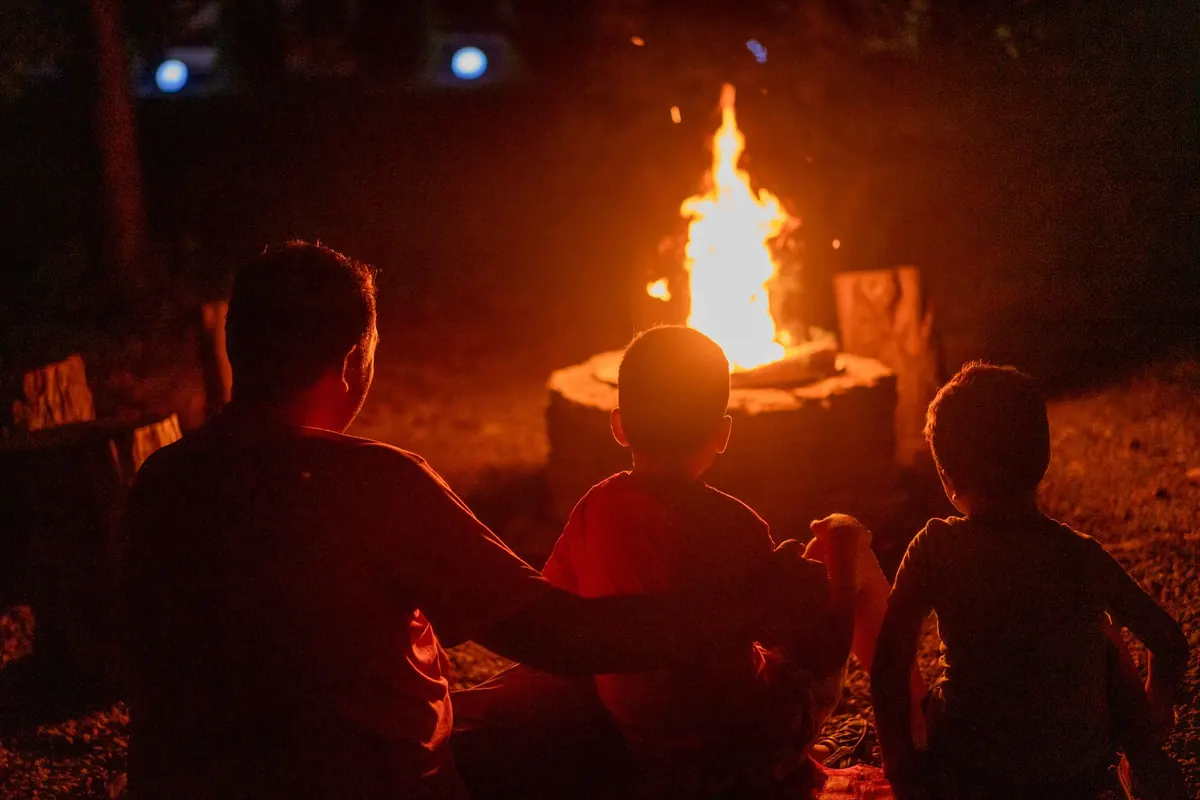
If you land in a singalong, a cowboy poetry gathering or a front-porch session, ask what key before you join, and do not push the tempo. Learn the chorus, not the verses. Keep the phone in your pocket unless someone invites you to record, and if they do, say their name at the top of the file. When you pass a song on later, credit the singer who gave it to you.
One more note on the older printed collections. They carry dialect spellings and terms that read badly now. Use them as historical documents, note what you are seeing, and do not perform the caricature. The people who made these songs were workers, and the songs are best served by taking the work seriously.
Your Listening and Reading Kit
Keep it simple and keep it written down. A paper notebook with three columns — place, song and version, who told you — will outlast any app. Record only with permission, label every file with a date and a name, and end each day by writing out one verse you heard while it is still in your head. Before you leave a town, ask the historical society whether they would like a copy of your notes. Most will say yes, and some will hand you a folder of things nobody has asked about in years.
Photo: Maaark / Pixabay