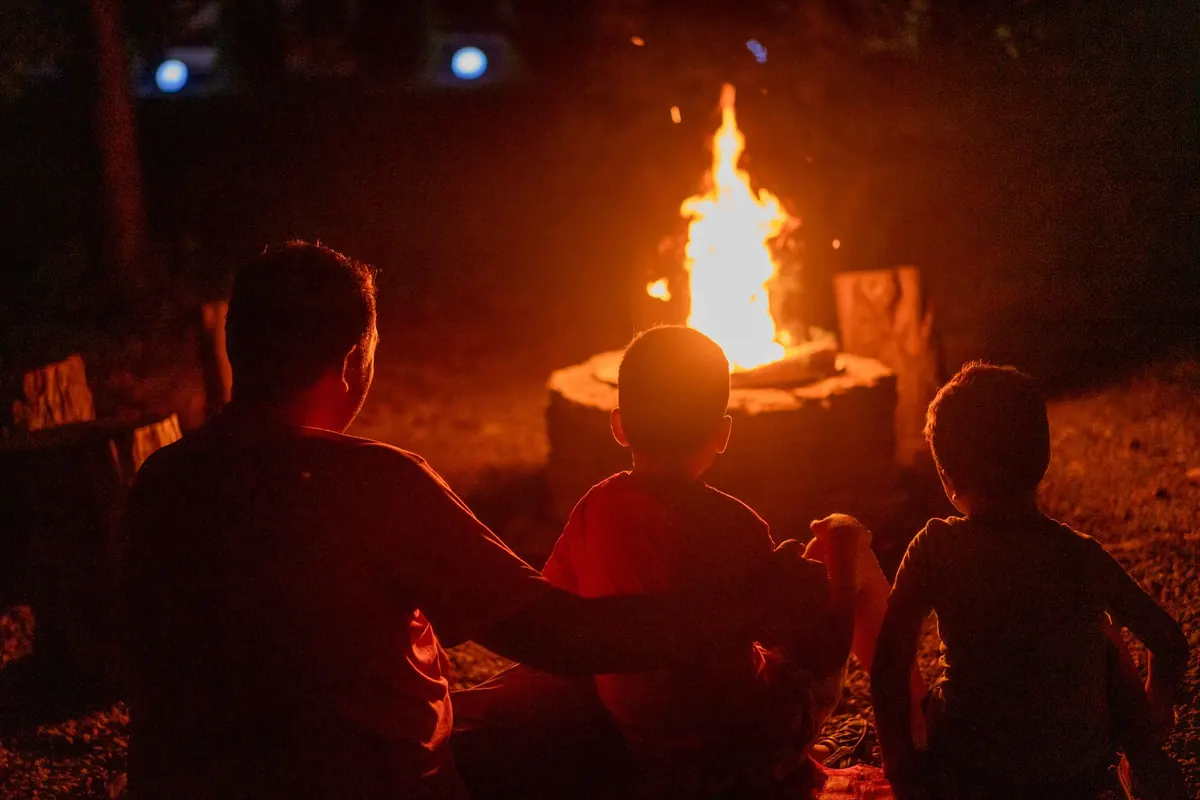
Play “Red River Valley” on a parlor piano and it is a pleasant nineteenth-century tune. Play the same melody on a fiddle, with a guitar thumping a bass note on the first beat and a chord on the second, and a room appears around it: dust, a wagon, somebody leaving. Nothing in the tune changed. The frame did.
That frame — the instruments, the rhythmic habits, and a particular way of telling a story — is what people usually mean when they call a folk song western. It is less a genre than a set of conventions, borrowed from British Isles ballads, Mexican corridos, church hymns, fiddle contests, and cattle-camp singing, and then boiled down to what a few people could carry and play.
Western Is a Frame, Not a Category
There is no official border. A song about Montana sung with a string quartet can sound like a parlour piece; a song about a Liverpool sailor sung with a fiddle and a walking bass can sound like it belongs in a saloon. What matters is whether three layers line up: timbre (what the instruments are made of and how they are played), groove (how the beats sit), and narrative posture (who is singing and what they refuse to explain).
A song can be western on one layer only and still work. “El Paso” is a pop ballad in its bones, but its story patterns and its Spanish-flavoured guitar figure do the rest. Most traditional songs people call western hit at least two of the three.
Instruments: What You Hear Before the Words
The core is almost always strings, and almost always acoustic. Not because electricity is forbidden, but because the sound needs to suggest portability — an instrument that could be leaned against a wagon, played on a porch, or passed around a fire.
The String Core
A guitar doing the rhythmic work, a bass (upright, or a guitar playing bass lines) holding the floor, and a fiddle carrying the melody. Mandolin, banjo, Dobro, and a second guitar fill the middle. Each has a job, and the arrangement is usually sparse enough that you can hear which one is doing it.
- Guitar — bass notes and chords alternating; flatpicked for drive, fingerpicked for loneliness.
- Fiddle — melody with slides, double stops, and open strings left ringing as drones.
- Upright bass — two notes per bar, no fuss, the walk of the whole thing.
- Mandolin or tenor banjo — chop chords on the offbeats, a dry ticking behind the voice.
- Accordion or harmonica — breath and squeeze, especially where the song leans toward the border or the dance hall.
- Jaw harp, spoons, a brushed snare — texture, not volume.
The Fiddle Rule
Same instrument as a violin, different job description. A western fiddle part slides into notes rather than landing on them, holds long bows under the melody, and uses open strings as drones instead of hiding them. Vibrato is used sparingly, and the low string is a rhythm instrument as much as a pitch. If you want a quick test, listen to whether the player treats the open strings as accidents or as architecture.
What Breaks the Spell
A tight drum kit with a bright backbeat and cymbal wash will pull most traditional songs straight into country-rock. So will heavy compression, synth pads, and a busy electric lead that answers every vocal line. Restraint is the aesthetic. If something is playing, it should be doing a job you could name.
Rhythm: The Walk, the Trot, and the Slow Sway
Western folk songs mostly move at the speed of travel. That is not a metaphor; it is a practical guide to tempo. If the song is about going somewhere, the pulse should feel like something you could walk beside.
The Boom-Chick
The default is 4/4 with a bass note on one and three, and a chord on two and four. It is plain, and it is sturdy, and it leaves room for a singer to phrase against it. Let the bass note ring slightly longer than feels tidy; that hangover is what makes the rhythm sound like a room rather than a click track.
The Two-Step and the Waltz
Dance rhythms do a lot of the character work. A cut-time two-step gives a song a barn-dance push without any drum kit at all. A 3/4 waltz signals farewell almost automatically — “Oh My Darling, Clementine” swings between comedy and grief largely because of that sway. Pick the dance before you pick the tempo.
Space Is a Rhythm Choice
Many weak arrangements fail not because the beat is wrong but because there is no silence in it. Leave the last bar of a verse empty. Let the fiddle hold a note while the guitar stops. A song with gaps sounds like it was recorded in a place; a song without gaps sounds like it was assembled.
Melody and Harmony: Plain Chords, Open Air
Melodies tend to sit in pentatonic or hexatonic shapes — five or six notes doing most of the work — with a few wide leaps that make a phrase feel like a call across distance. Harmony is usually three or four chords, often just I, IV, and V, sometimes with a modal colouring: a Dorian tune that never quite resolves sounds older and more unsettled than a major-key one.
Arranging tricks matter as much as the chords themselves. Open fifths with no third leave the mood ambiguous. A drone under the melody makes everything sound like it was played outdoors. Seventh chords in moderation suggest a dance hall rather than a parlour. When in doubt, do less: a folk song with three chords and a drone will usually out-carry the same song with nine chords and a key change.
Story Patterns: The Landscape as a Character
This is where most of the western feeling actually lives, and it is the part players forget. The narrative habits are remarkably consistent across trail songs, murder ballads, and farm laments.
The Posture of the Singer
The narrator is usually first person and usually plain-spoken, and often claims to have been there. Sometimes the singer is already dead and describing his own funeral — a very old ballad convention that transferred to the plains without much modification. Either way, the voice is a witness, not a commentator.
Recurring Plots
- Departure. Someone leaves a place or a person, and the road is the only resolution offered.
- The warning. A dying or doomed singer describes what happened so the listener will not repeat it.
- The working song. Cattle, mines, rails, harvest — the job supplies the vocabulary and the rhythm.
- The bad bargain. A gamble, a sale, a promise that costs more than it paid.
- The place that outlasts the people. The valley, the river, or the prairie stays; everyone in the song does not.
- The return that does not work. Somebody comes back and finds the house changed, or gone, or occupied.
Small Concrete Things, and Silence About the Meaning
Good western songs are built out of specific nouns: a river with a name, a town, a brand, a month, a coat, a debt. Abstraction kills the effect faster than a drum kit does. And notice how rarely these songs explain themselves. “Bury Me Not on the Lone Prairie” never states its theme. It simply asks for something, and the request does the work. If your lyric has a line that tells the listener what to feel, cut it and trust the detail you already planted.
How to Test a Song in Five Minutes
Strip the arrangement down and see what survives. A song is genuinely western in character if it still holds up when nothing decorative is left.
- Play it with one guitar and one voice. If it collapses, the arrangement was carrying it.
- Slow it to a walking tempo. Does the story still make sense at that speed?
- Name every instrument in the room and what it is doing. Remove anything you cannot justify.
- Read the lyric as prose. Count the concrete nouns. Replace two abstractions with things you could point at.
- Add one drone or one open string and see whether the song suddenly sits in a landscape.
- Find the line that explains the moral. Try the verse without it.
Do that, and you will usually find that the western quality was there all along in the material — the frame just needed to stop arguing with it.
Photo: 822640 / Pixabay